Without school vaccine mandates, many kids may never see a doctor
Every December brings an end-of-year crush to Washington, D.C.’s pediatric clinics. In addition to the usual culprits — colds, the flu, RSV — that’s also the time when the city school district issues notices reminding parents of children who are behind on required vaccinations to get caught up by December 8, or risk being turned away from school.
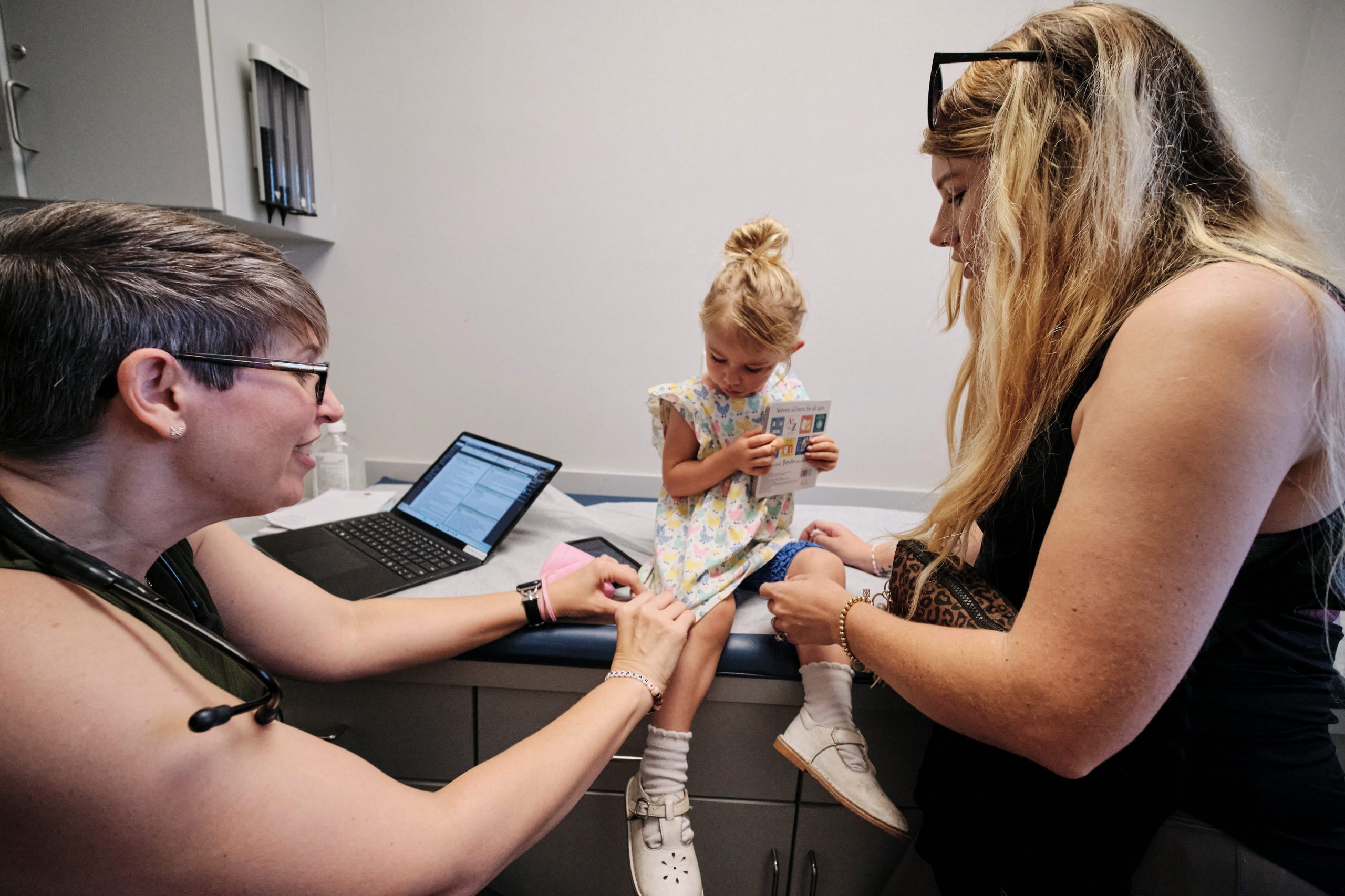
For Dr. Megan Prior, a pediatrician in the district, the vaccine rush brings an opportunity to catch families up on more than shots. This past December, Prior said, a 12-year-old overdue for her meningitis, tetanus and other vaccines also presented with severe prediabetes that was on the verge of becoming full-blown disease.
For years, the girl’s mother, busy with full-time work and two other children, hadn’t prioritized bringing her to the doctor for regular checkups — until she got the notice about the overdue vaccines.
“Having vaccine mandates reminds parents to engage in their kids’ health,” Prior said.
Like the federally recommended childhood vaccination schedule, those state-level mandates are under steady attack. Last year, at least 10 states made it easier for families to opt out of vaccines required by schools. For example, Iowa now requires school districts to disclose information on the vaccine exemption process on their websites and in school registration materials. Idaho prohibits day cares, schools and employers from mandating “medical interventions” of any kind — most pointedly, vaccines.
More than a dozen similar bills have already been introduced in 2026, with lawmakers in Indiana and New Jersey, for instance, proposing that those states develop reporting systems for documenting “adverse events” related to childhood vaccines. A South Carolina bill would prohibit any vaccines from being mandated for children under the age of two.
Research has long shown that strong school and child care vaccine mandates lead to higher immunization rates. “School requirements make a massive, massive difference,” said Prior, citing her own experience watching HPV vaccination rates surge in Virginia, where she used to work, after the state added it to the list of required shots for middle school entry in 2008. In communities that have faced recent measles outbreaks, like Spartanburg, South Carolina, vaccination rates are almost uniformly low.
But doctors say there is another, less understood public health risk of the shift away from vaccine mandates: Fewer children will end up getting routine medical checkups of any kind. Untold numbers of children come in for physicals and wellness checks only when their school forms are due, like Prior’s 12-year-old patient. That can be true for families who are neutral, or even somewhat positive, about vaccines, physicians say. For young children, those checkups can be crucial not only to ensure they stay healthy, but also to provide them with early diagnosis of any disabilities or developmental delays.
Meanwhile, for the growing number of parents with skeptical or negative feelings about vaccines, the distrust over inoculations can rupture families’ connection with doctors and the care they provide. Many private clinics across the country do not serve unvaccinated children. And families who mistrust shots sometimes also mistrust the doctors who administer them, prompting them to seek medical care outside the established system, perhaps from chiropractors or naturopaths, if they seek it at all.

Related: How the science of vaccination is taught (or not) in US schools
Pediatricians across the country have watched the number of vaccine refusers in their clinics and hospitals rise steadily in recent years — a result, they say, of misinformation distributed on social media, widespread distrust of vaccines that grew out of the Covid pandemic, and, most recently, the steady assault on vaccines by Health and Human Services Secretary Robert F. Kennedy Jr. In early January, federal officials removed six vaccines from the Centers for Disease Control and Prevention’s recommended list for all children. In December, the CDC also rescinded its recommendation that all newborns get a hepatitis B shot.
Yet the states hold critical cards in determining whether children actually need shots to attend child care or school, meaning the cascade of new legislation at the state and local level could have a large effect on vaccination rates. By the time children start kindergarten, all states have historically required them to show proof of vaccination against diphtheria, tetanus and pertussis; chicken pox; measles, mumps and rubella; and polio. Some of these illnesses can spread quickly in schools, where young children still learning basic hygiene sit, eat and play in close proximity.
Vaccine mandates can also serve as the only formal connective tissue between families and physicians. Most states do not require regular screenings for health issues that can impede young children’s learning, like uncontrolled asthma or hearing problems. Slightly less than half of states mandate any kind of comprehensive health exam for children, according to a 2018 study. That means some children might go to the doctor only for their vaccinations. Any rollback in child care and school entry requirements has the greatest impact on children from birth to age 6, the years that most of the shots come due.
Idaho has gone the furthest of all states in upending school vaccine mandates. A law enacted last spring bans employers, schools and child care centers from requiring anyone to get a vaccine. But even before the new state law took effect, scoring an exemption had become as easy as signing “a scrap of paper” citing an objection of some kind, said Dr. Tom Patterson, the president of the Idaho chapter of the American Academy of Pediatrics, who has practiced in the state since 1998.
Over several years in the early 2000s, two Republican leaders in the deeply red state had actually made strides at tightening school entry requirements. Former Idaho first lady Patricia Kempthorne and state Sen. Dean Cameron both championed the issue, and for several years starting in 2011, Patterson said, families who wanted to opt out of school vaccine mandates had to request each shot exemption separately; they also had to sign a form that repeatedly mentioned “death” as a possible consequence of declining the vaccines.
But those stricter policies began to erode by the late 2010s, Patterson added. And with looser requirements, and the arrival of the pandemic, childhood vaccination rates plummeted. In 2018, nearly 90 percent of kindergarteners in the state had most of their shots, for diseases including measles, mumps and polio, according to CDC data; by 2024, the number getting shots for almost all reported diseases had dipped below 80 percent. For more contagious diseases like measles, studies show, an approximately 95 percent immunization rate is necessary to reach herd immunity, so that unvaccinated children are protected by their vaccinated classmates.
Ron DeSantis, the Republican governor of Florida, and his state surgeon general have been trying to eliminate vaccination requirements for school entry, though the legislature is moving forward with a proposal that weakens those requirements but falls short of a ban.
Related: Vaccine mandates could make it harder to find child care workers
Rather than eliminating school mandates entirely, it is far more common for states — including New Hampshire, Texas and West Virginia — to try to make it easier for families to receive vaccine exemptions for their children. New Hampshire, for instance, recently codified a Parental Bill of Rights that guarantees families can choose not to vaccinate because of religious beliefs.
“The easier it is to claim exemptions, the lower the vaccination rates,” said Dr. David Higgins, an assistant professor of pediatrics and public health at the University of Colorado and a practicing pediatrician in Denver. One 2012 study found that when states allowed parents to exempt their children from mandatory vaccines on philosophical grounds — and not just religious or medical ones — exemption rates more than doubled.
In Maine, one of a handful of states that allow only medical exemptions, longtime school nurse Patricia Endsley said the strict policies help maintain a statewide vaccination rate of about 97 percent.
“I don’t think some people have a chance to be hesitant” to get vaccinations for their children, she said. “They have to have it or homeschool.” (Endsley did, however, mention hearing about families “purchasing” medical exemptions for about $500 through an out-of-state company called Frontline Health Advocates.) Endsley, who retired from her position as a school nurse last year and is now president-elect of the National Association of School Nurses, administered some of the shots herself with parent permission for families who lacked a primary care provider.
For years, West Virginia, which like Maine only allowed medical exemptions, has also been a case study in the power of strict school entry requirements. The state has historically posted lower early childhood vaccination rates in the country for newborns to 2-year-olds, but has risen close to the top of the pack for kindergarteners — a clear result of the school mandate, researchers and physicians say.
“It’s very common to see parents waiting until their children are school age,” said Dr. Youmna Mousattat, a pediatrician in Charleston, West Virginia. Mousattat works out of a hospital, and in recent years she’s watched the number of families declining their first vaccination, hepatitis B, rise from an almost startlingly rare event to a routine occurrence.
Yet now, West Virginia’s 90-year-old law is in jeopardy, with an executive order from Governor Patrick Morrisey last year calling for the state to grant religious exemptions. Although the order has been paused and the state’s Supreme Court is considering related legal challenges, health officials had already started to grant hundreds of religious exemptions in the early months of 2025.
West Virginia physicians, like their colleagues in other states, are beginning to see a rise in deadly diseases, some of which had almost entirely disappeared in the U.S.
Dr. Andrea Lauffer, a physician who treats many young children in the hospital where she works in South Charleston, West Virginia, said she diagnosed a young elementary-school-age student over the summer with hepatitis B for the first time in her career. In the fall, an unvaccinated child who had traveled out of state came in with a rash that looked like measles and had to be quarantined. And the last quarter of 2025 brought sharply rising numbers of whooping cough cases across the state.
“When I was in training, we really didn’t have to worry about these diseases,” she said. “My concern is that we’re going to keep seeing diseases that we thought we would never have to see again.”
Related: Young children have unique needs, and providing the right care can be a challenge. Our free early childhood education newsletter tracks the issues.
In the case of the Washington, D.C., child with prediabetes, the timely diagnosis possibly prevented her from developing common complications of untreated diabetes: kidney problems, loss of blood flow to hands and feet, even blindness. “There do need to be dramatic lifestyle changes and, if they can’t make those, patients need to start medication right away,” Prior said.
Many families don’t make it to the pediatrician until the school deadline hits, agreed Higgins. Instead, they visit regularly for the first year or two of their child’s life, then disappear until their kids reach school age. “I can’t tell you how many times it’s the summer right before the start of kindergarten, and parents come in and say, ‘We’re here because we got a letter from school,’” he said.
Those appointments often include far more than shots. Pediatricians assess growth, nutrition and blood pressure and screen for lead poisoning, chronic diseases, developmental delays and much more.
Higgins points out that, nationwide, a significant majority of parents are still choosing to vaccinate their children. But he’s also concerned about more states following the lead of Idaho and Florida and attempting to totally upend school vaccine mandates. “That will ultimately result in more preventable harm and illness in children,” he said, both from diseases that vaccines can forestall and “from other diseases that aren’t being caught and treated because families are disconnected from health care.”
In addition to her fear of relaxed school requirements, Prior said, she spends so much time these days answering patients’ questions about vaccines that it can crowd out crucial discussion of other topics. “I used to spend time talking about how to optimize sleep, how to address picky eating and a range of other topics related to children’s health,” she said. Now, she added, much of that time is devoted to explaining and, sometimes, defending vaccines.
Related: Tracking Trump: How he’s dismantling the Education Department and more
In Idaho, Patterson sees not only reluctance but also, occasionally, hostility from parents when he asks them if he can talk about vaccines. These days, that’s usually during his monthly week at the hospital, where he tries to make sure as many newborns as possible leave with a hepatitis B shot, as well as an injection of vitamin K, which can prevent uncontrolled bleeding. At the start of that conversation, “one father said recently, ‘How can we trust anyone in medicine?’” Patterson recalled.
The physician no longer feels comfortable displaying his hospital ID and stethoscope outside of the hospital or clinic. He noted that the hospital used to experience a “Code Gray,” when a patient assaults a physician or staff person, once every couple of months. Now there are often three or four each day.
The end of school vaccine mandates in Idaho are just the final nail in the coffin in a state where families have been bombarded with “misinformation” about vaccines for years.
Indeed, the divide over shots has contributed to what some fear could be a lasting breach between many families and modern medical care — with lasting implications for public health.
Although hard numbers don’t exist, several pediatricians report seeing a rise in the number of private clinics that won’t accept unvaccinated patients, often citing the need to protect medically fragile patients and family members in waiting rooms. In Florida, first lady Casey DeSantis recently held a roundtable for mothers frustrated that they couldn’t find a pediatrician after refusing vaccines.
While Higgins said he understands the rationale for declining to treat unvaccinated children, he thinks clinics should give vaccine-skeptical caregivers some flexibility — and time to change their minds — before refusing care. “If a parent feels dismissed right from the start, you’ve closed that door to build rapport and a relationship,” he said.
In Idaho, where the share of kindergarteners vaccinated against measles is nearly 20 percentage points below what’s required for herd immunity, Patterson is still trying whenever possible to build up that rapport — and he still has successes. But some days the response can be discouraging, and he has thought about shifting entirely to a clinic focused on autism and developmental pediatrics.
While it used to be the vaccine refusers who sometimes felt pressured to withdraw their children from public school, it can now be those most committed to vaccines, including physicians, who feel that urge. Patterson’s children are no longer school age, but if they were, he said, “I wouldn’t send them to public school.”
This story about school vaccines was produced by The Hechinger Report, a nonprofit, independent news organization focused on inequality and innovation in education. Sign up for the Hechinger newsletter.
Since you made it to the bottom of this article, we have a small favor to ask.

If you believe stories like the one you just finished matter, please consider pitching in what you can. This effort helps ensure our reporting and resources stay free and accessible to everyone—teachers, parents, policymakers—invested in the future of education.
Thank you.
Liz Willen
Editor in chief

Source link

You may also like

FAMU Says Censoring the Word “Black” Was a Mistake
NIH Avoided Cuts, but Lacks Permanent Leaders in Top Posts