The Ultimate Guide to Making Safe, Fluffy Slime for Kids
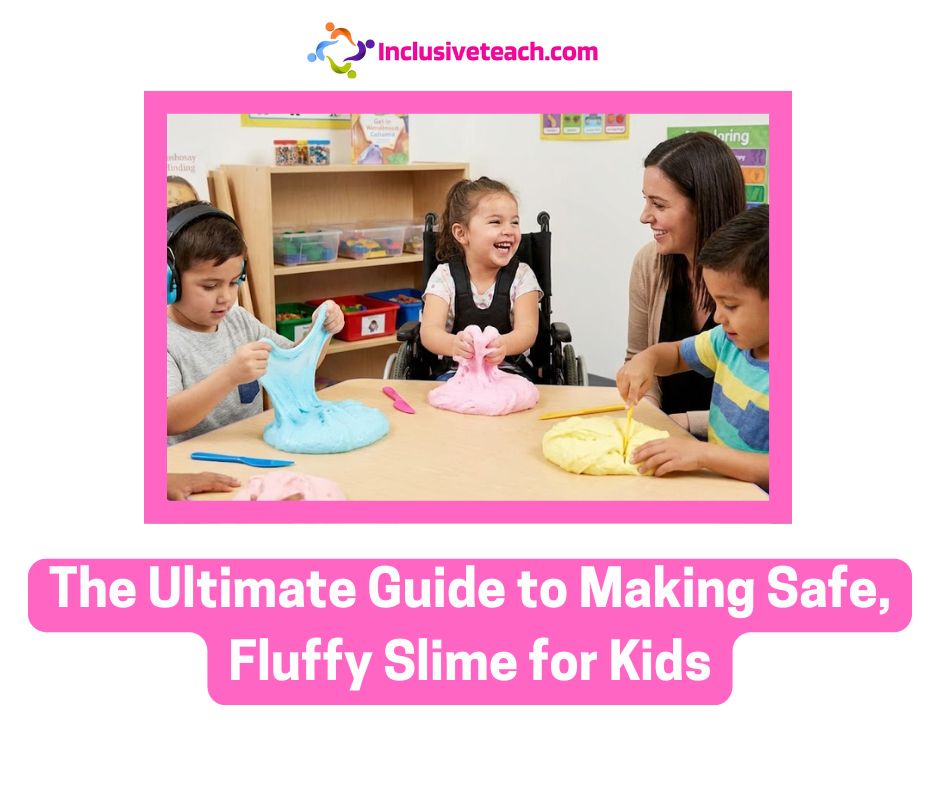
Making slime is a fantastic sensory activity that kids of all ages enjoy. This guide will provide you with three easy-to-follow recipes for creating safe, non-toxic fluffy slime. We’ve included a basic recipe, one for a super-fluffy version, and a fun unicorn-inspired swirl. Let’s get started with the ingredients you’ll need!
Recipe Card 1: The Basic Fluffy Slime Starter
This recipe is the perfect starting point. It’s simple, requires only a few ingredients, and produces a soft, puffy slime that is incredibly satisfying to play with. The key to its fluffiness is the shaving cream!
Ingredients:
- 2/3 cup of White PVA School Glue
- 1/2 teaspoon of Baking Soda
- 1/4 cup of Water
- 2-3 cups of Shaving Cream (not gel)
- 1.5 tablespoons of Contact Lens Solution (must contain boric acid and sodium borate)
- Liquid Food Coloring (optional)
Instructions:
- In a bowl, mix the glue, water, and baking soda.
- Add the shaving cream and mix until combined.
- Stir in food coloring if desired.
- Slowly add the contact lens solution while stirring until the slime forms and pulls away from the bowl.
Once your ingredients are mixed, the fun part begins! You’ll see the mixture transform from a liquid to a fluffy, cloud-like substance. It’s important to knead the slime with your hands to get the perfect consistency.

Recipe Card 2: The Super-Fluffy Cloud Slime
For those who want an extra-fluffy experience, this recipe adds even more shaving cream to create a slime that feels like a soft, airy cloud. It’s a truly unique sensory experience!
Ingredients:
- 1 cup of White PVA School Glue
- 1 teaspoon of Baking Soda
- 4+ cups of Shaving Cream (the more you add, the fluffier it gets!)
- 1 tablespoon of Contact Lens Solution (must contain boric acid)
- Food Coloring (optional)
Instructions:
- Mix the glue and baking soda in a large bowl.
- Stir in the food coloring.
- Add a massive amount of shaving cream (start with 4 cups) and fold it into the glue mixture.
- Add the contact solution and mix until the slime forms. Knead until it’s no longer sticky.
Now that you’ve mastered the basic and super-fluffy recipes, it’s time to get creative! You can add glitter, small foam balls, or even scents to customize your slime. Our final recipe shows you how to make a beautiful unicorn swirl.

Recipe Card 3: The Magical Unicorn Swirl Slime
This recipe is a fun variation that combines three different pastel colors of fluffy slime. The final product is a gorgeous, swirled creation that looks as good as it feels.
Ingredients:
- 1 batch of Basic Fluffy Slime (see Recipe Card 1), divided into 3 parts
- Pink, Blue, and Purple food coloring
- Fine iridescent glitter
Instructions:
- Make a batch of Basic Fluffy Slime and divide it into three separate bowls.
- Add a different food color (pink, blue, purple) to each bowl and knead until the color is uniform. Add glitter to each part if desired.
- Take a piece of each colored slime and lay them next to each other.
- Gently twist and swirl the three colors together to create a marbled effect. Do not over-knead, or the colors will blend into a single, muddy color.
Safety & Storage Tips:
- Always supervise children during slime-making.
- Wash hands after playing with slime.
- Store slime in an airtight container to keep it fresh.
- If slime gets sticky, add a few drops of contact solution and knead.
- Do not let slime come into contact with fabric, carpet, or hair, as it can be difficult to remove.

Why Fluffy Slime Is a Secret Weapon for Inclusive Learning
You know what? Fluffy slime isn’t just a messy kitchen experiment or a trend that ruins carpets. Honestly, in my twenty years of teaching special needs and raising my own autistic children, I’ve found it to be one of the most versatile tools in my classroom arsenal. It bridges the gap. It connects the dots. When we talk about inclusion, we often think of expensive technology or specialized curriculums. But sometimes? It’s just shaving cream and glue.
Sensory Regulation Without the Overwhelm
Here’s the thing about fluffy slime: it offers a unique tactile experience that differs significantly from standard slime. Standard slime can sometimes be too wet, too cold, or too slippery for children with tactile defensiveness. Fluffy slime, on the other hand, feels drier and softer—like a sturdy cloud. This texture is often more approachable for students who might struggle with “slimy” sensations.
For my students with sensory processing differences, this material provides deep pressure input when they squeeze it. This can be incredibly grounding. It helps regulate their nervous system. You can even adjust the “fluffiness” by adding more shaving cream to suit a child’s specific sensory threshold.
- Tip: If a student is hesitant, place the slime in a sealed ziplock bag first. They can squish the fluffy slime without direct contact. It’s a safe introduction that respects their boundaries.

Strengthening Fine Motor Skills the Fun Way
We spend a lot of time in school focusing on pencil grip and scissor skills. Manipulating fluffy slime is a stealthy way to build hand strength and finger dexterity. The resistance it offers is perfect for strengthening the intrinsic muscles of the hand.
I often hide small objects, like beads, plastic coins, or letter tiles—inside a large mound of fluffy slime. Asking a child to dig them out using only their index finger and thumb forces them to practice that crucial pincer grasp. They think they are on a treasure hunt; I know they are prepping for handwriting. It’s a win-win.
Language Development Through Descriptive Play
Communication isn’t just about speaking; it’s about connecting concepts to words. Fluffy slime is a goldmine for language development. When a child plays with it, natural opportunities for descriptive language arise. Is it squishy? Is it soft? Is it stretching?
I like to use this time to model core vocabulary. We might narrate our actions: “pull,” “squeeze,” “roll,” “pat.” For my non-verbal students or those using AAC (Augmentative and Alternative Communication) devices, this high-interest activity is a great motivator to request “more” or comment “like.”
Have you ever tried using scent as a communication prompt? Adding a drop of vanilla or lavender to your fluffy slime recipe can spark conversations about memory and preference. “Does this smell like cookies?” “Do you like the smell?” It opens a door.
Social Interaction and Turn-Taking
Sharing is hard. Sharing something cool like fluffy slime is even harder. But that makes it the perfect medium for social skills instruction. In my classroom, we often make a giant batch together. This requires cooperation. One student pours the glue, another adds the baking soda, and a third gets the best job—spraying the mountain of shaving cream.
We practice waiting. We practice asking, “Can I have the blue slime, please?” We practice trading. Because the material is easily divisible, it visually demonstrates fractions and sharing in a concrete way. “I have a big piece, you have a small piece. How can we make them equal?”
Reducing Anxiety and Building Emotional Resilience
Let me explain a moment I see often. A child is frustrated, perhaps overwhelmed by the noise of the assembly hall or a difficult math problem. Their anxiety is spiking. Handing them a ball of fluffy slime can act as an immediate circuit breaker.
The rhythmic motion of kneading and stretching provides a repetitive, soothing input. It’s mindful. It keeps hands busy so the mind can settle. It’s not a cure-all, of course, but as a self-regulation tool, it is surprisingly effective. And because it’s “cool,” older students don’t feel stigmatized using it as a fidget tool, unlike some other therapy aids that might look “babyish.”
Adapting for Physical Limitations
Inclusion means everyone gets to play. For students with limited mobility or low muscle tone, standard slime can sometimes be too tough to manipulate. Fluffy slime is aerated, making it lighter and easier to pull apart.
For students who cannot grasp, you can put the slime on a tray and allow them to press into it with a flat hand or even their elbows. The auditory feedback—that satisfying “squish” sound—provides cause-and-effect learning even without fine manipulation.
Using fluffy slime in the classroom isn’t just about making a mess (though, let’s be honest, that happens). It’s about leveling the playing field. It allows a child who struggles with holding a pencil to be the expert sculptor. It allows a child who is non-verbal to share a sensory experience with a peer. It turns a simple chemical reaction into a catalyst for connection.
Related
Discover more from Special Education and Inclusive Learning
Subscribe to get the latest posts sent to your email.
Source link

You may also like

Understanding the Concrete-Pictorial-Abstract (CPA) Approach

Words That Sound the Same: A Visual Homophone Guide