The Call for Excellence Seeking, ETEducation
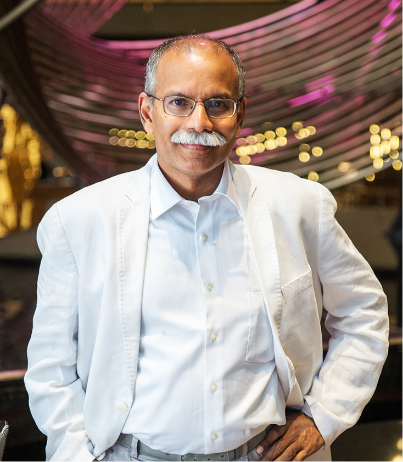
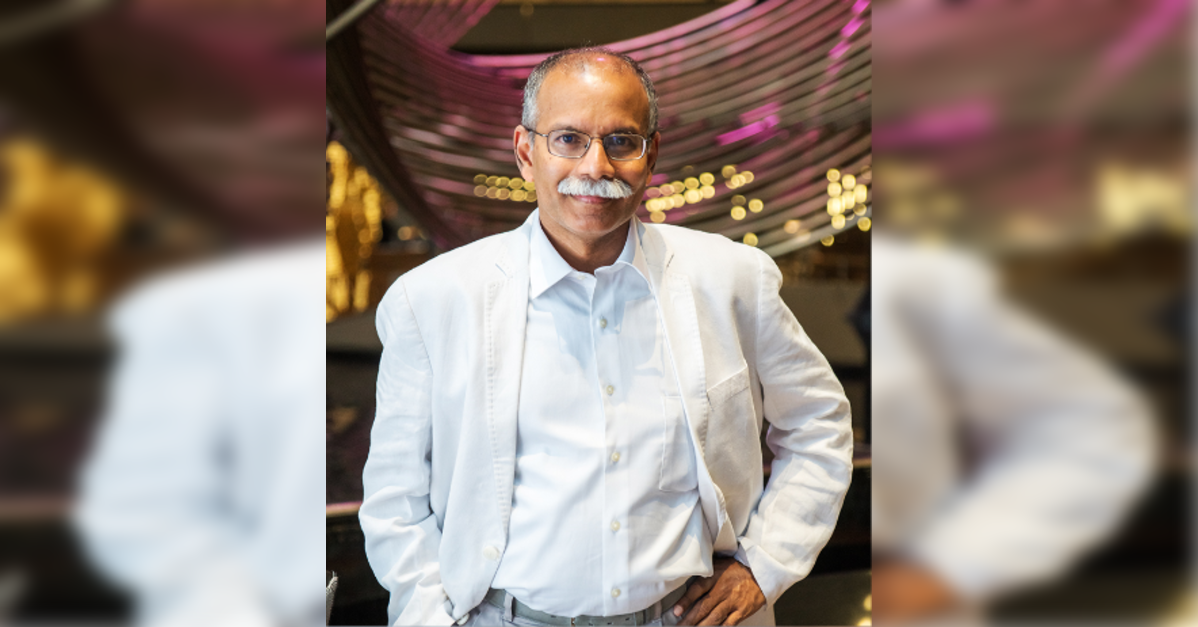
By Dr Padmakumar Nair
From a policy standpoint, 2025 marked an important inflection point for Indian higher education. The introduction of the Higher Education Commission of India (HECI) represents a long-awaited structural reform. For decades, universities in India have operated within a fragmented regulatory environment characterised by overlapping mandates, procedural rigidity, and compliance-driven oversight. A unified regulator holds the promise of coherence, reduced administrative friction, and most importantly, the creation of institutional space for innovation.
This reform is timely. Higher education today is being reshaped by rapid technological change, artificial intelligence, shifting learner expectations, global mobility, and increasing societal demands for relevance and accountability. Policy frameworks designed for a slower, more predictable world struggle to respond to these realities. By consolidating regulatory authority, HECI has the potential to enable universities to adapt more quickly, experiment responsibly, and align education with emerging social and economic needs.
Yet policy reform, by itself, does not constitute transformation. Beyond regulatory intent, the lived experience across most campuses in 2025 reveals a clear pedagogical pause. Outcome-based education, experiential learning, industry integration, interdisciplinary curricula, and AI-enabled pedagogy dominate institutional narratives. However, in practice, change has been largely incremental. New labels have often been applied to old methods. Syllabi are revised, assessments renamed, and technology added, but the underlying philosophy of teaching and learning remains largely unchanged.
This persistent gap between policy ambition and pedagogical reality can be traced to two structural constraints. The first is a shortage of genuinely innovative policy thinking. While consolidation and simplification are necessary, they do not address deeper questions that define the future of universities. How much autonomy are institutions truly trusted with? How do we balance accountability with experimentation? How should quality be assessed in an era of flexible pathways, hybrid learning, and personalised education? Without engaging these questions, policy risks becoming administratively efficient yet intellectually conservative.
The second, and more serious, constraint is the acute shortage of well-trained, high-quality faculty. Indian higher education has expanded at a pace unmatched by the development of its academic workforce. Institutions, programs, and enrolments have grown far faster than systems for cultivating teaching excellence, research depth, and pedagogical leadership. As a result, universities are often compelled to prioritise minimum qualifications over mastery, regulatory ratios over educational outcomes, and content coverage over intellectual formation.
This faculty challenge is not merely quantitative; it is profoundly qualitative. In an age where AI can generate information, summarise content, and even simulate expertise, the value of the human educator lies elsewhere. What cannot be automated is judgment, ethical reasoning, contextual understanding, and the ability to integrate knowledge across domains. These capacities are foundational to higher education, yet they require educators who themselves embody intellectual humility, philosophical depth, and pedagogical maturity.
This is where the idea of excellence seeking becomes critical.
Excellence seeking is not about rankings, metrics, or competitive posturing. It is a cultural orientation, a sustained commitment to doing things better than before, guided by reflection, responsibility, and purpose. Excellence is not achieved through grand reforms alone, but through thousands of thoughtful, cumulative improvements in teaching practice, curriculum design, assessment, mentoring, and institutional culture.
Unfortunately, much of higher education today is trapped between compliance seeking and credential seeking. Compliance seeks to satisfy regulators; credentials seek to satisfy markets. Excellence seeking asks a different question: Are we genuinely helping students become wiser, more responsible, and better equipped to navigate uncertainty? This question is uncomfortable because it cannot be answered through checklists or dashboards. It demands intellectual honesty and moral courage.
India’s higher education moment therefore demands simultaneous policy innovation, pedagogical innovation, and cultural renewal anchored in excellence seeking. Policy innovation without pedagogical renewal produces structurally reformed but educationally stagnant institutions. Pedagogical ambition without enabling policy frameworks leads to isolated experiments that fail to scale. Excellence seeking provides the connective tissue between the two, aligning regulation, teaching, and institutional purpose.
Both policy and pedagogy must be underpinned by intellectual humility and the courage to deviate from legacy models. Universities must question inherited assumptions about rigour, assessment, and relevance. Faculty development must move beyond tool training toward engagement with learning science, ethics, and the philosophy of education. Regulators must shift from policing compliance to enabling trust-based governance.
Most importantly, the purpose of higher education must be re-articulated. In an uncertain, AI-mediated world, universities cannot define success solely in terms of employability or skill acquisition. These are necessary but insufficient. The deeper task is to cultivate graduates capable of sound judgment, ethical reasoning, empathy, and long-term responsibility. Skills evolve rapidly; wisdom does not.
HECI has opened a policy window. Whether India uses this moment to merely reorganise higher education or to genuinely reimagine it will depend on our collective commitment to excellence seeking, persistent, and uncompromising in its standards. The future of higher education will not be decided by slogans or structures alone, but by the everyday choices institutions make about what they value, what they reward, and what they are willing to change.
Dr Padmakumar Nair is the Director and Vice Chancellor of Thapar Institute of Engineering & Technology.
DISCLAIMER: The views expressed are solely of the author and ETEDUCATION does not necessarily subscribe to it. ETEDUCATION will not be responsible for any damage caused to any person or organisation directly or indirectly.

Source link