Class IX Life Skills: Introduction to Self-Defence
Life Skills &value Education – Class-IX – Unit 5: what Is Self- Defence?
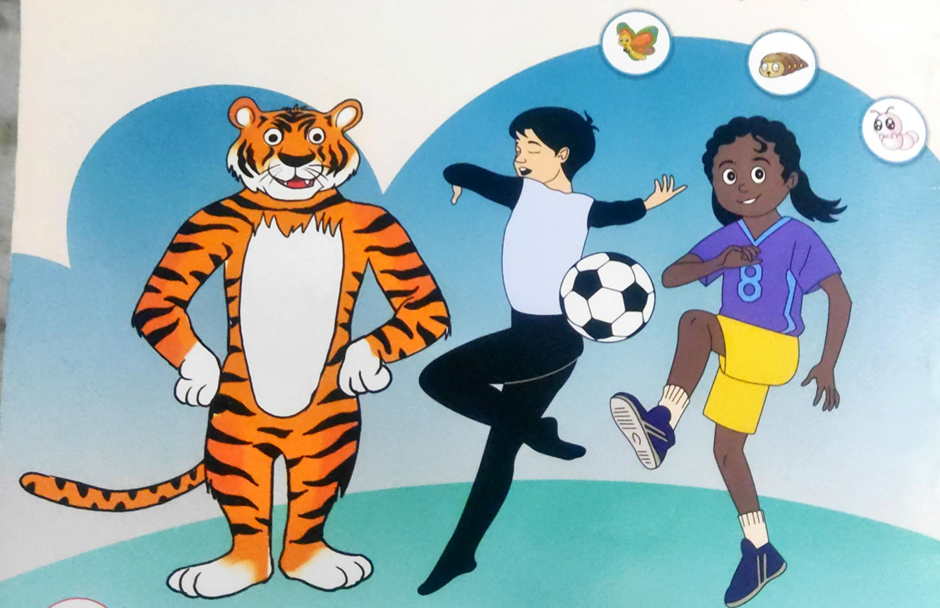
Arpit, Sana and Pokso (The Tiger)
Arpit and Sana were returning from the market when they saw a body-builder- type thug come towards them threateningly. Just then, Sana looked at someone behind the thug and shouted, “Hey, you there!” The thug turned, and Sana and Arpit ran home safely. Later, when Pokso met them in the park, they told him what had happened.
Arpit said, “Why did you shout, Sana? I was just about to practise my karate technique on him. After all, I am a big fan of Bruce Lee. ” Sana smiled and said, “Hey, I used a self- defence technique, too!” Arpit could not believe what he was hearing. He said, “No, you shouted to distract him, and we ran. Where is the self- defence in that?”
Pokso said, “Anything that allows you to be safe is self-defence. Most people feel it is about physical techniques to hit, harm or injure the person trying to do unsafe things, but anything you do that lets you get away from them is self- defence. This means anything that makes you more aware, more assertive, and more able to distract the wrong-doer and keeps you safe is self-defence. It also includes physical techniques that let you escape and resist violent attack.” Arpit said, “I had no idea!” Sana smiled happily
Pokso explained, “Self-defence training provides psychological awareness and verbal skills, not just physical training. Self-defence means protecting oneself and one’s loved ones from harm. It does not necessarily mean fighting. It is much better to protect yourself and your loved ones without using physical force. Most self-defence situations don’t even involve physical contact. Also, physical self- defence is primarily not about strength but technique and presence of mind. That is why anyone can learn it, no matter their age, size or fitness level. Self-defence techniques also include how to identify potential threats, how to remain calm in unfavourable situations, and why and how to fight using words.
Remember there is no guarantee that we can protect ourselves. What self-defence training does is that it gives us more choices of how to act and helps us prepare our response. You might be surprised that the best response for someone faced with an attacker is to slow down the attacker, try to calm things down as much as possible, and prevent the attack. Self-defence is a tool. Like any other tool, the more you know about it, the better your decision to use it or avoid it in a given situation will be.
A good self-defence programme does not “tell” someone what they “should” or “should not” do. Instead, it offers options, techniques, and a way of analysing situations to help the person make a good decision. A good self-defence programme empowers us to make good decisions when faced with unfavourable situations.”
Remember!
✓ Self-defence techniques are for protection, not revenge or settling personal disputes.
✓ They should only be used as a last resort. If such a situation can be avoided, avoid it. For example, if you sense trouble, walk away. Don’t stand there and wait for something to happen.
✓ You must also understand that these techniques can cause serious injury, so be careful. These techniques are not used to bully or frighten others or for fun.
Studies have shown that obeying the attacker does not guarantee that you will not be brutally attacked and injured. That is why you must use self-defence to make the situation less dangerous and get away as soon as possible. You don’t want a situation where your attacker, has the chance to call for backup or reinforcements.
Physical readiness is essential, but we also need to be mentally alert. It is not so difficult to be mentally ready. We can do so by paying attention to the things and people around us. Mental alertness also means believing that some emergencies can happen to you. If you do not believe this, no matter how much you have ‘prepared, you will freeze when the moment comes for you to take action. A simple example to explain this is how you study very hard for your exams but don’t prepare for the time pressure and stress of performing well. As a result, even though you may have learnt and memorised everything from the syllabus, when the time comes for you to write your answers, you may draw a blank, become confused, or forget certain important things. In the same way, being ready for an emergency means, first of all, believing that you can land yourself in an emergency.
Safety Tips
✓ Ask for help: If you feel unsafe or uncomfortable in a situation, act on it. Don’t hesitate to ask for help.
✓ Keep calm, think straight: Even the best martial artist will not be able to defend themselves if they panic.
✓ Better safe than sorry: If you feel you are in trouble or someone is stalking or eyeing you, try to avoid walking alone or in an isolated area.
✓ Exit Points: if you’re alone, you can walk close to another group. If you cannot do that keep the exit points in mind-that is, areas by which you can escape. If you feel uneasy, you can shout or make a loud noise to startle the other person.
✓ If possible: try varying your routine. It becomes easy for a perpetrator to plan something if they know your regular time and route. At the very least, you should know an alternate route in an emergency.
✓Walk and talk confidently: People who appear confident are much less likely to be targeted than someone who looks timid.
✓Be aware of your surroundings: Try to avoid places with low visibility and lighting.
✓Walk in the opposite direction of traffic: This way, you can look at oncoming traffic. Also, walk on the footpath, not the road. It makes it harder for others to snatch your valuables or kidnap you.
✓ When taking a public bus, avoid one that has few or no passengers and avoid taking roadside cabs and autos.
✓ If you have a phone, always keep it charged, so you can use it when necessary. You should have your parents and other trusted adults’ phone numbers on speed dial so that you can call them instantly in an emergency.✓ If uncomfortable with someone in an elevator, press the buttons for all the floors. The frequent stops discourage the *perpetrator*.
Download PDF : ashamodernschool.in Class-9-Life-Skills-2025-26


