Class IX Life Skills: Understanding Cyberbullying
Life Skills & value Education – Class-IX – Unit 4: Cyberbullying
Cyberbullying is a new type of bullying that has become prevalent with the widespread use of the Internet. It occurs when a child or teen uses the Internet or, text messages, instant messaging, social media websites, online forums, chat rooms, online gaming or other digital technology to harass, threaten, or humiliate another child or teen. It can happen 24 hours a day, 7 days a week, and has the power to humiliate a kid even when they are safely alone at home. Cyberbullying doesn’t require physical strength or face- to- face contact and isn’t limited to just a handful of people at a time. Cyberbullying messages and images can be posted anonymously and distributed quickly to a very wide audience. It can be difficult and sometimes impossible to trace the source. To make matter worse, anything shared on the Internet is almost impossible to delete and can be shared with people across the world in no time.
How a cyberbully hurts:
- Deliberately excludes someone from an online group.
- Pretends to be you online to send embarrassing or damaging messages that will affect your relationship with others.
- Repeatedly posts or sends offensive, rude, and insulting messages to/ about you.
- Spreads lies and rumours about you.
- Posts videos or sends unwanted or intimidating messages.
- Engages in online lights fights, posting scornful and offensive messages.
- Tricks someone into revealing secrets or embarrassing information which is then shared online.
- Posts comments that are threatening or imply violent behaviour and/ or displaying self-harm tendencies.
What to do if you are being cyberbullied?
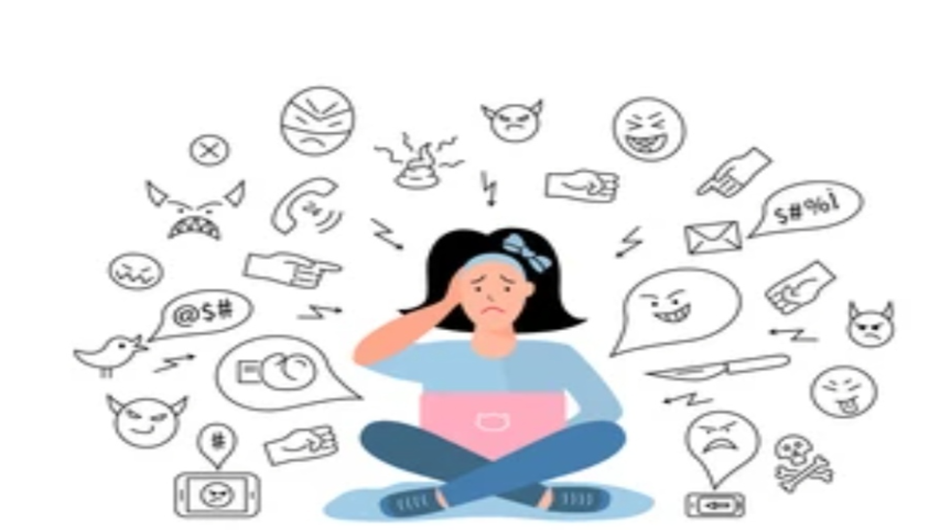
- Don’t blame yourself- it is not your fault that you are being cyberbullied. You should not let the cyberbully’s words or actions make you feel ashamed of who you are or what you feel. The cyberbully is the one with the problem, not you.
- Block the bully- it is very hard not to, but you should not respond to cyberbullying, because that only makes the situation worse. Use the settings on your devices to block emails, IMS, and texts from cyberbullies.
- Save the evidence of cyber bullying- keep abusive text messages or screenshots of web pages where you have been bullied. It is proof of what the cyberbully is doing when you report their behaviour to a trusted adult such as a family member, teacher, or school counsellor. Sharing incidents of cyberbullying with the trusted grown- ups in your life will control the cyberbully to some extent.
- Report –Report threats of harm and inappropriate vulgar messages to the police. In many cases these, cyberbully’s actions can be prosecuted by the law.
- Be absolutely inflexible- cyber bullying is almost never limited to just one or two incidents. It is much more likely to be a steady or steadily increasing attack on you, over an extended period of time. It might sound troublesome, but just like the cyberbully, you need to be inflexible too, and report each bullying incident until it stops.
How to protect yourself from cyberbullying
1. Use computer courtesy- whether sending an email, chatting in a chat room, or posting in a forum, be courteous and respectful to others.
2. Think after before posting-
What is posted online today may come back to haunt us later. Once on the Internet, online messages, post, pictures, or videos will remain there forever, and can be viewed by a massive, unknown online audience. With cyberbullying, one cannot just turn off the computer and expect everything to return to normal. Disconnecting from the internet or other electronic devices is not a solution, because the effects of cyberbullying cannot be controlled.
3. Keep personal information private- posting private and personal information in the wrong locations can have serious consequences. for example, people may try to take over your online identity for their own unsafe proposes, or they may target you because you have given away too much information about yourself, such as name, address, telephone number, school name and location, and /or the city you live in. be careful of who you send pictures to, and monitor and ensure your password safety. When you post your personal information on sites, such as Facebook, Twitter, and other social networking sites, it is best to restrict privacy settings, so that only your friends can view it. If private information is posted in a group setting, read the guidelines before posting to make sure such information will not be made known to others.
4. Create safe boundaries- many children and teens, users of social networking sites or the Internet don’t know, in the beginning, how dangerous these devices can be if abused or used inappropriately. Of course, you will be excited to connect with your friends and classmates online, but please know that many on the Internet abuse others. Your loved and trusted adults should always be part of your friend list on social media.
5. Be an active bystander- A bystander is someone who watches something without taking an active part in it. Cyberbullies will continue bullying if bystanders support them or do nothing to stop them. Be a leader; oppose bullying actively .Here are some tips for you.
- If you witness cyber bullying, do not join in, nor stand by idly .of course, you will feel peer pressure but try to stand up for yourself and speak out against bullying.
- Document- if you see cyberbullying and report it.
- Don’t forward hurtful messages or laugh at inappropriate jokes.
- Share about bullying incidents with an adult you trust.
- Read, write and find out more about effective preventive measures you can take against cyberbullying.
In order to handle cyber bullying and cybercrimes, it is important that you know the following terms.
Blog: an online journal with photos and videos./ CD: compact disc./ chat room: a website that allows people to send instant messages to each other./ cookie: an invisible file that is placed on a computer when a website is visited ./cyber: relating to information technology /the Internet and virtual reality./ virtual means something that does not exist physically./ dark web: portion of the Internet that is intentionally hidden through massed IP addresses./ email spoofing: sending emails to you that look genuine and form a trusted email ID, when actually, they are not./ fake news :false stories that appear to be news./ hacking: using a computer to steal private information./ happy slapping: use of a mobile or camera to record an incident where a person is bullied, and then circulating the recording on social media./ IP address: a unique stirring of number separated by full stops that identifies each computer using the internet protocol to communicate over a network./ ISP: is short form for internet service provider, which is a company that provides users access to the internet.
IT Act: the information technology (amendment) Act’ 2008. It is the primary law in India dealing with cybercrime and electronic commerce.
key logger: is software programme or hardware that records all keystrokes used on a keyboard ./malware: software like spyware or other virus, worms or Trojans that infect and intent to damage or take control over an electronic device like computer mobile etc. Malware software like spyware or other virus worms or Trojans that infect an intent to damage or take control over an electronic device like computer, mobile etc./ MMS: multimedia messaging service./ Phishing :A fake email or message to a person to authenticate an account that leads to disclosure of personal information such as passwords and credit card numbers./ privacy: the state of being free from unwanted intrusion, public scrutiny, secret surveillance or unauthorised disclosure of one’s personal data or information. / rumour spreading: circulating gossip through email, text messages, pictures or other means. / spam: junk mail that is sent too many people at once. / Trojan malware: it is a type of malware that is often disguised as a legitimate software .Trojans can be employed by cyber- thieves and hackers trying to gain access to users ‘systems./ trolling: cyberbullying a person online by making repeated and persistent harassing comments or intimidating remarks./ Virus: A harmful computer programme that damages computers. Viruses can be sent to users through email or downloaded from website.
Download PDF : ashamodernschool.in Class-9-Life-Skills-2025-26


